Is This The Best Skater For Idaho's Clearwater River Steelhead?

Words by Klaus Frimor
First of all, let me clarify: I do not see myself as any type of expert on steelhead fishing, despite having done a fair bit of it for the past 15 years. Atlantic salmon on the other hand, I've chased all over the world beginning in the 1980s. Norway, Sweden, Scotland, Canada, Denmark.... In fact, for the past 25 years I've spent three months a year in Iceland, looking at thousands of Atlantics in that country’s gin-clear waters. I’ve also landed a few.
The Atlantic salmon is known for its willingness to take a “hitch” fly on the surface and, according to legend, the steelhead will as well. That’s the story I was told when I started steelheading . . . but no one I knew seemed to believe it. Aside from steelhead being caught on a Muddler, people only got them on the well-known and long-respected wet summer steel patterns, like the Green Butt Skunk and Lady Caroline.

THE CLEARWATER
My steelheading career didn't start in the United States, but instead on Argentina’s Santa Cruz River. When I finally got a chance to fish steelhead in the PNW, it was a February day on Washington’s Methow River with a bobber and a Double-Beaded Cheeseburger trailing a Lightning Bug. Ok. There. I admitted it.
After the Methow experiment I stumbled over to Idaho’s Clearwater River, which I've been fishing every year since. Despite trips to British Columbia, Oregon’s Deschutes River, and Washington’s Grande Ronde, I always return to the Clearwater, and that’s where most of my steelhead knowledge has been gained. As you may know, there’s a big difference between summer-run and winter-run steelhead, and the fish returning to the Clearwater each year are distinctly summer-runs. Therefore, my take on “hitched” and skated flies is primarily based on my interactions with summer-runs.
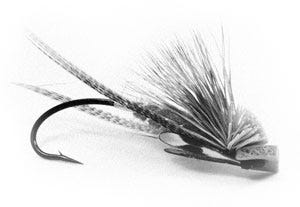
One guy decided to skate for smallmouth bass while we were, as he described it, "Nerding around." Halfway down the run, three steelhead had come to the deer-hair skater. At first we laughed at him, but when we saw the last fish boil on that fly there was no looking back.
By Accident!
Like I said earlier, “believing” in the hitch was tough. Despite what I’d heard for many years, I just didn’t believe enough to fish steelhead flies on the surface. Everything changed one sunny September day a few years ago. I was on the Clearwater, testing out some rod/line combos, when one guy decided to try and skate for smallmouth bass while we were, as he described it, “nerding” around. Halfway down the run, three steelhead had come to the deer-hair skater. At first we just laughed at him, but when we saw the last fish boil on that fly, there was no looking back. We quickly decided that skating is cool and can be very effective, as long as you keep staring at a fly popping across the surface.
Technique And Gear
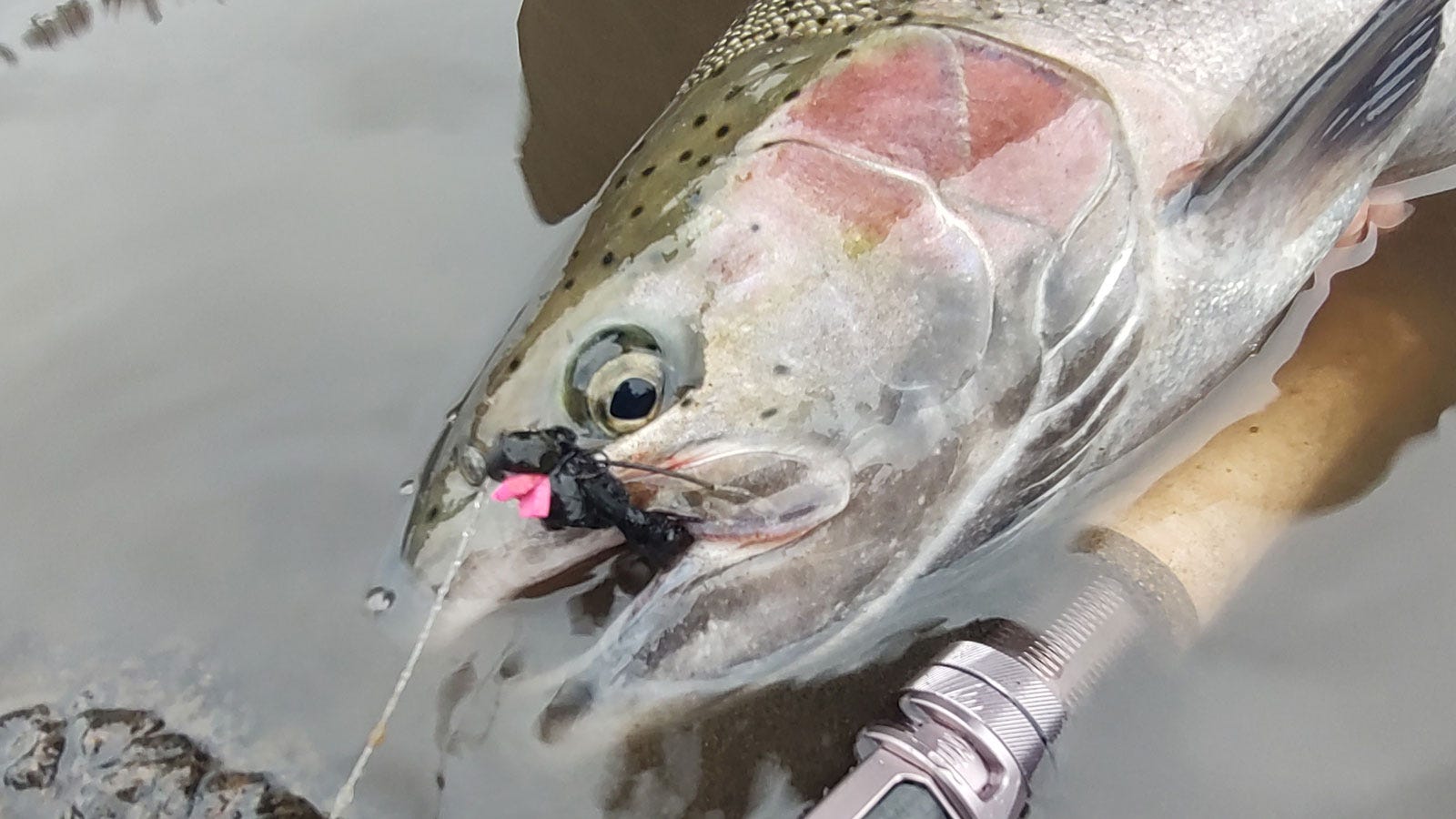
I guess there are many ways to skin a cat. Some people like a slow, downstream swing with a gentle “wake”, while I on the other hand, like a faster, square approach with a bit of popping added to the fly, either with the rod tip or created by simply pulling the line back and forth with the line hand. Either way, I have found that articulating the fly in this way draws far more boils and takes than simply swinging a wet fly under the surface or allowing a skated fly to patiently wander its way across the river. Which brings me to a simple recommendation: unless you can wade away from the bank or you are a highly skilled caster, it will be difficult to change the direction of your cast and turn over those larger, wind-resistant flies, often made out of foam and deer hair, with a standard or long-belly spey line. A shorter Scandi head (like Ballistic Express) will have more mass at the front and should turn over those flies. In addition, I always use a coated running line, versus mono, which helps turning over larger flies because that coating creates grip on the rear eyes. But most important of all, it's easier to cast the shorter heads, and fly fishing is supposed to be easy. Rods should be in the #7 to #8 range to get enough mass to securely turn over a proper skater, even at a distance.
Flies
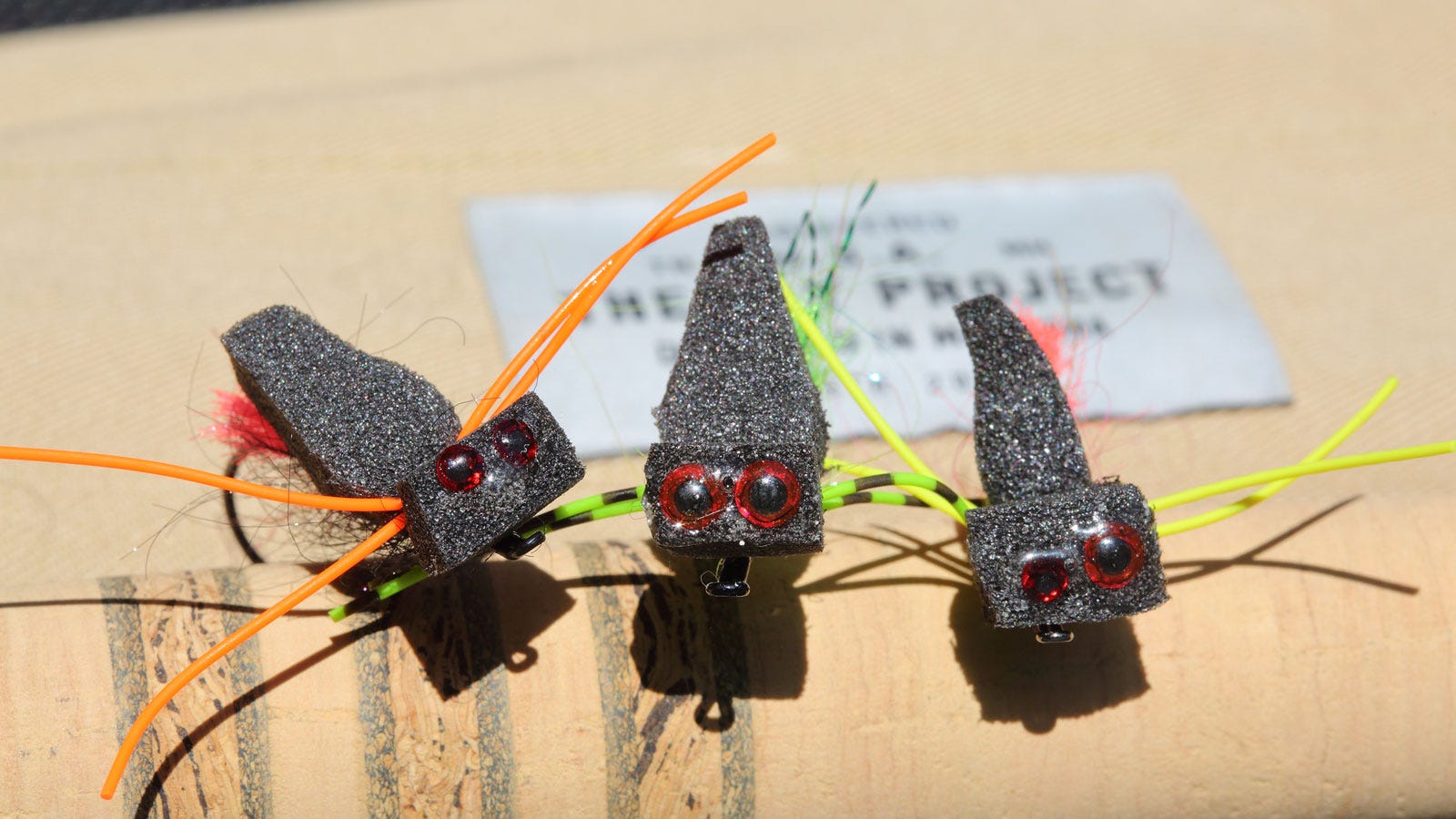
After years of tying traditional steelhead patterns with “spey hackles” and feather wings (which I enjoy) it was nice to realize that a little dubbing, a strip of foam, and a pair of rubber legs worked just as well, if not better, than those traditional flies, and they were not nearly as complicated to tie.
The critical point is to tie various sizes of flies with different head sizes. You want the head of the fly to match the speed of the water so it wakes/pops. If your fly doesn't “pop” when pulled, but drowns instead, it's probably because the front is too big for the current.
Whether the flies are tied on single hooks or as tube flies doesn't seem to matter. Using deer hair with foam doesn’t really make a difference either. Personally, I've had my best success with straight black foam bodies. Then again, it's also what I fish 90 percent of the time. So, there might be a correlation between time spent fishing that black foam and the number of fish landed. I know some anglers prefer brown or orange, or a combination of those colors. I tend to simplify my tying, if possible, and stick to black. Tie faster, fish more.
If you want to spice things up, there is a wide range of colorful rubber legs out there. Add whichever color catches your eyes. Or be brave and add some flash dubbing to the fly. Not sure the fish care, but it does make you smile every time you open your fly box. But again, keep it simple is my motto.
Clearwater Time
If you want to try skating flies for Clearwater steel, it’s not too early to give it a try. Fish are already in the river, in fact they have been so for a month or more, and there are people picking them up. If you want in on the action, which continues into mid-to late-October or so, tie or buy a handful of skaters and get out there. The worst thing that can happen is that you, like me, start believing in the myth of steelhead on a skated dry.