SWINGING FOR STEELHEAD: FRANK CHURCH WILDERNESS, SALMON RIVER IDAHO
Words by Drew Evans
Late September. I’m sitting in Dan Short’s booth at the Clearwater Spey Clave in Orofino, Idaho, when my phone rings. It’s my good friend, Travis De Boer.
“What do you have going the last week of October?” he says. “Want to come fish and stay at Shepp?”
Immediately I said, “I’m doing nothing! I’m there!”
Then he tells me to bring a couple friends.
I lean over to Dan and ask, “You want to go swing some of the most untouched steelhead water in the Lower 48?”
Dan says, “Uh, yeah!”
Next, I see House of Fly's web experience specialist Darren Wood. Once he heard the words, wild steelhead, long runs, and no crowds, he was in.
Just like that, the Shepp Ranch steelhead crew was assembled.
Then came the hard part: waiting.
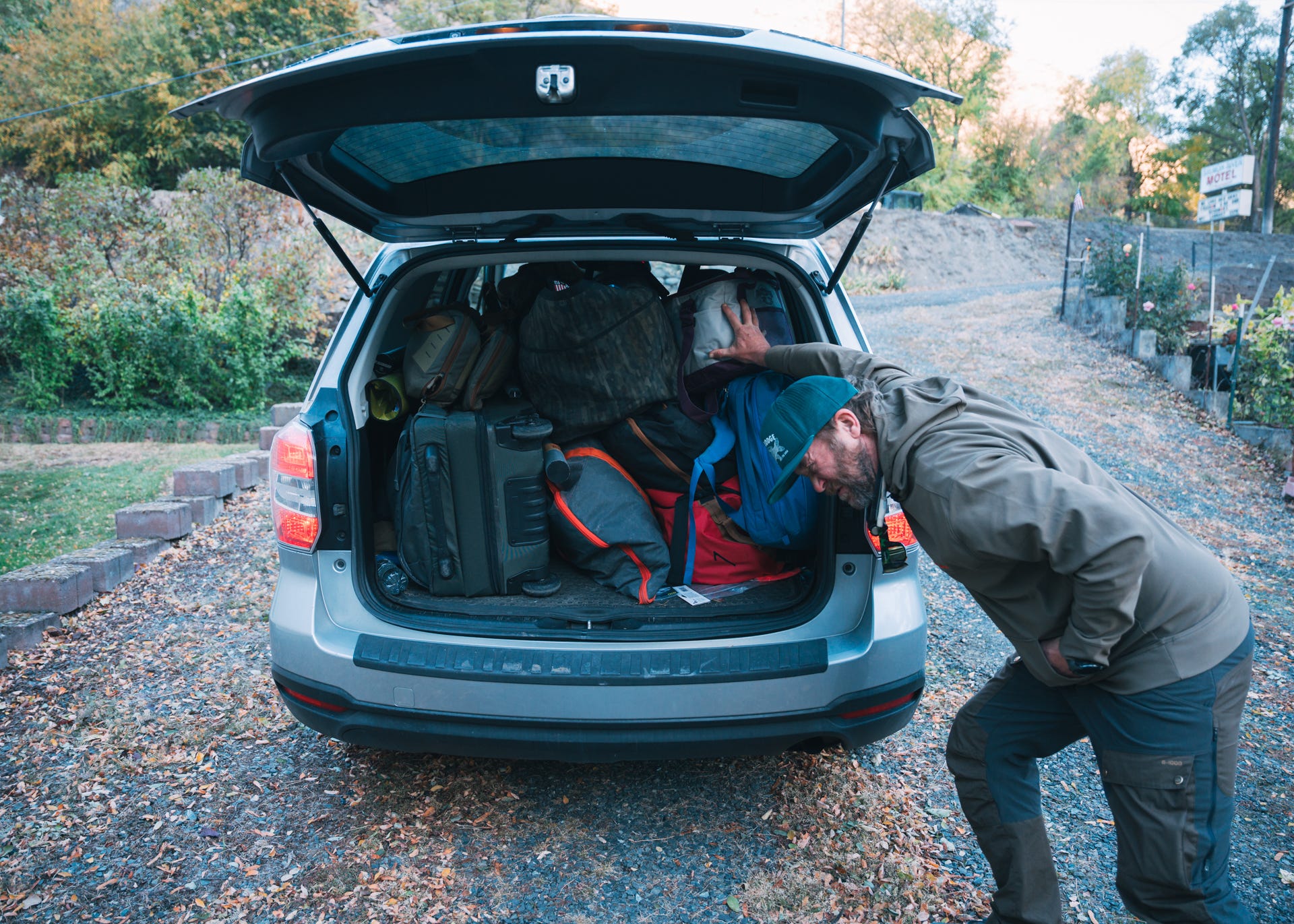
The next few weeks were filled with everything that makes a steelhead trip a true adventure: digging through gear piles, organizing lines and tips, stacking fly boxes, and burning late nights at the vise, tying intruders, tubes, and heavy swinging flies that are meant to move fish in deep, canyon water. Every text thread for the next several weeks revolved around water levels, sink-tips, and whether we had enough flies to survive getting chewed up by rocks.
Dan and Darren would be rolling in from Craig, Montana, after our annual House of Fly Camp, a gathering of industry, media and fly shop managers, held at The Trout Shop, right on the banks of the Missouri River. Along with being a hardcore swing angler, Dan reps brands like Turtlebox, Rising Nets, Nautilus Reels, Oro’s Strike Indicators and more. So, naturally, our truck would look like a rolling fly shop by the time we arrived.
The crew met at my house in Lewiston, Idaho, grabbed a few hours of sleep, and before first light we were on the road, headed for Steelhead Country.
By the time we rolled into Riggins, Idaho, our anticipation was through the roof. We grabbed a few last-minute supplies, topped everything off, and continued toward the end of the road. Literally.
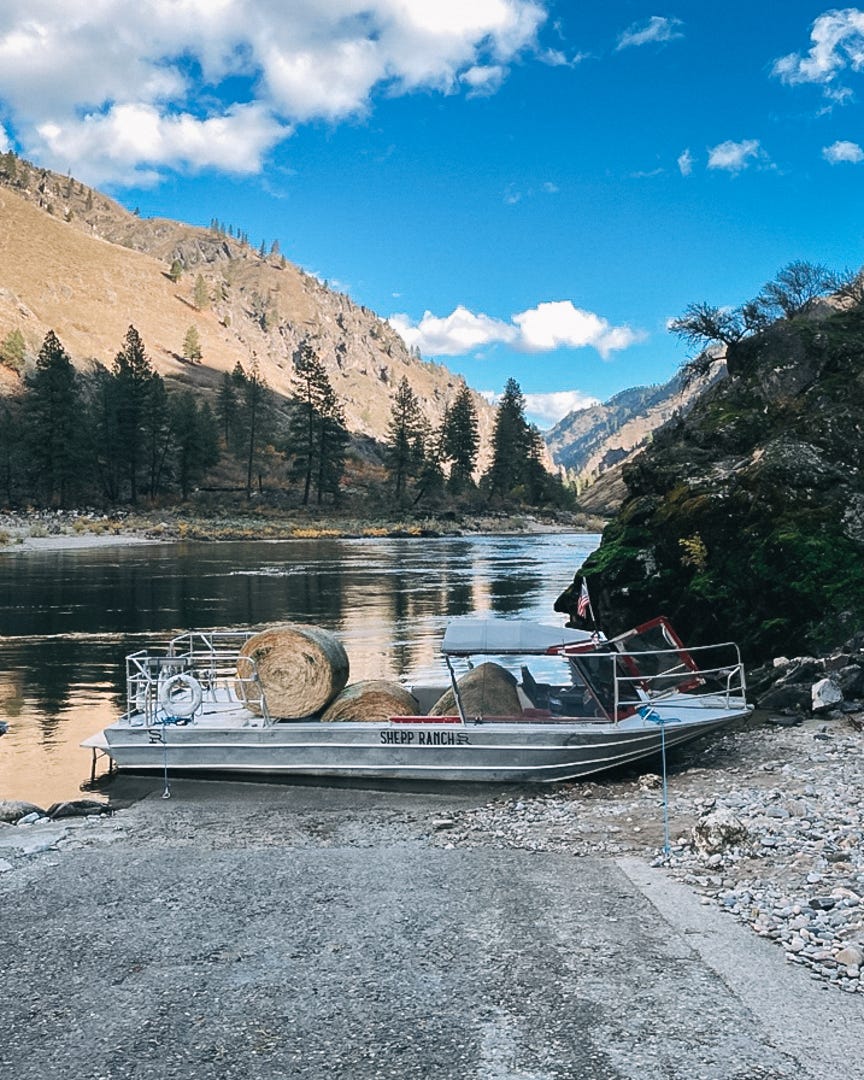
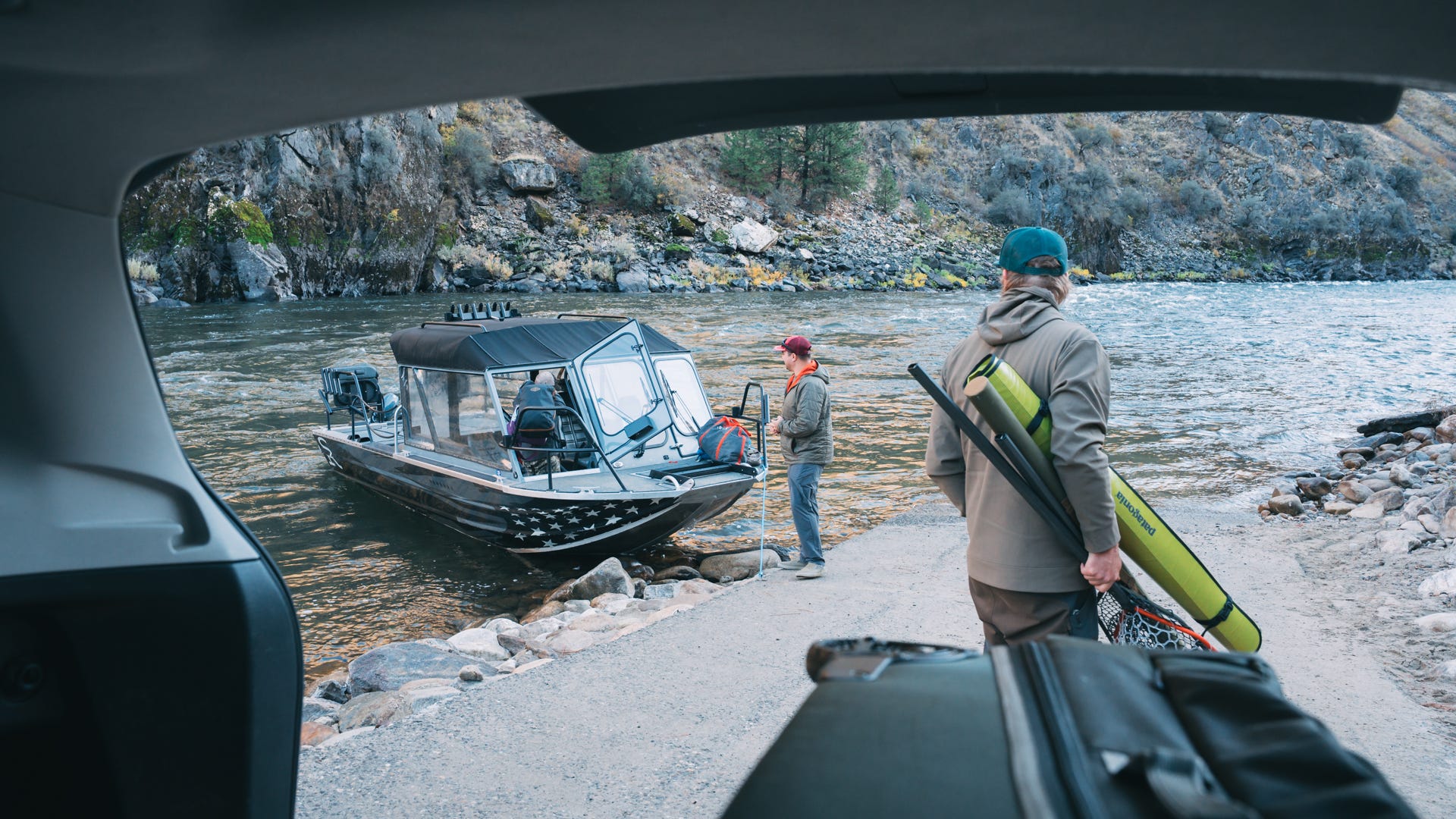
We eventually reached Vinegar Creek Boat Ramp, where pavement ends and civilization more or less disappears. From there, we made the long jet boat run upriver into the canyon and ultimately, to Shepp. If you’re not reaching the Ranch by boat your options are limited. You can fly into Shepp Ranch by bush plane or helicopter, or float down from the Middle Fork of the Salmon River,
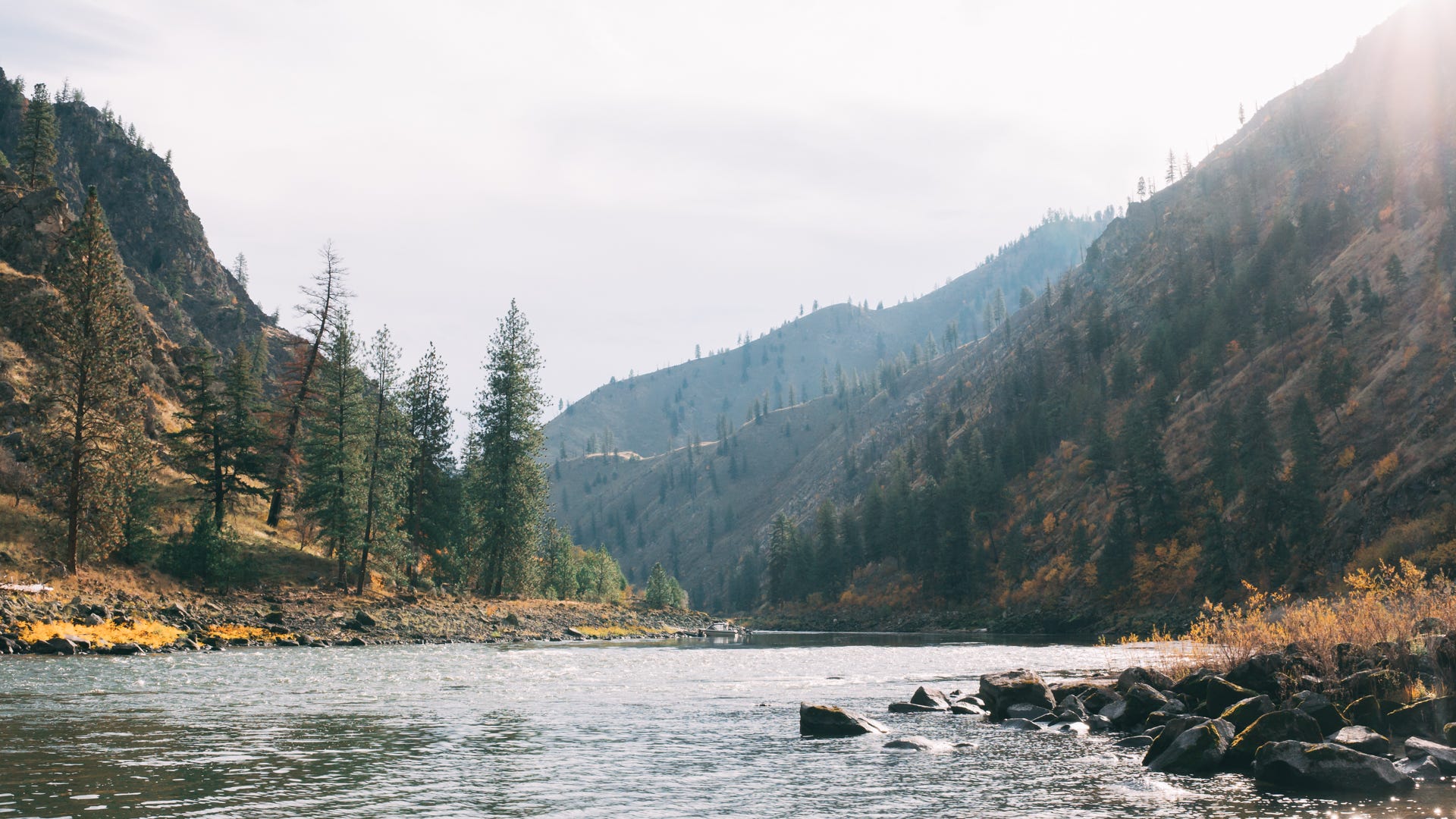
As the boat pushes upriver, deeper into the canyon, long emerald runs reveal themselves around every corner. Massive boulders, ledges, soft seams, tailouts, and walking-speed buckets slide past as occasional rays of sunlight break through the steep canyon walls. Everywhere you look during the 40-mile run feels fishy. It’s the kind of water that makes it impossible not to imagine a swung fly coming tight to a 40-inch buck.
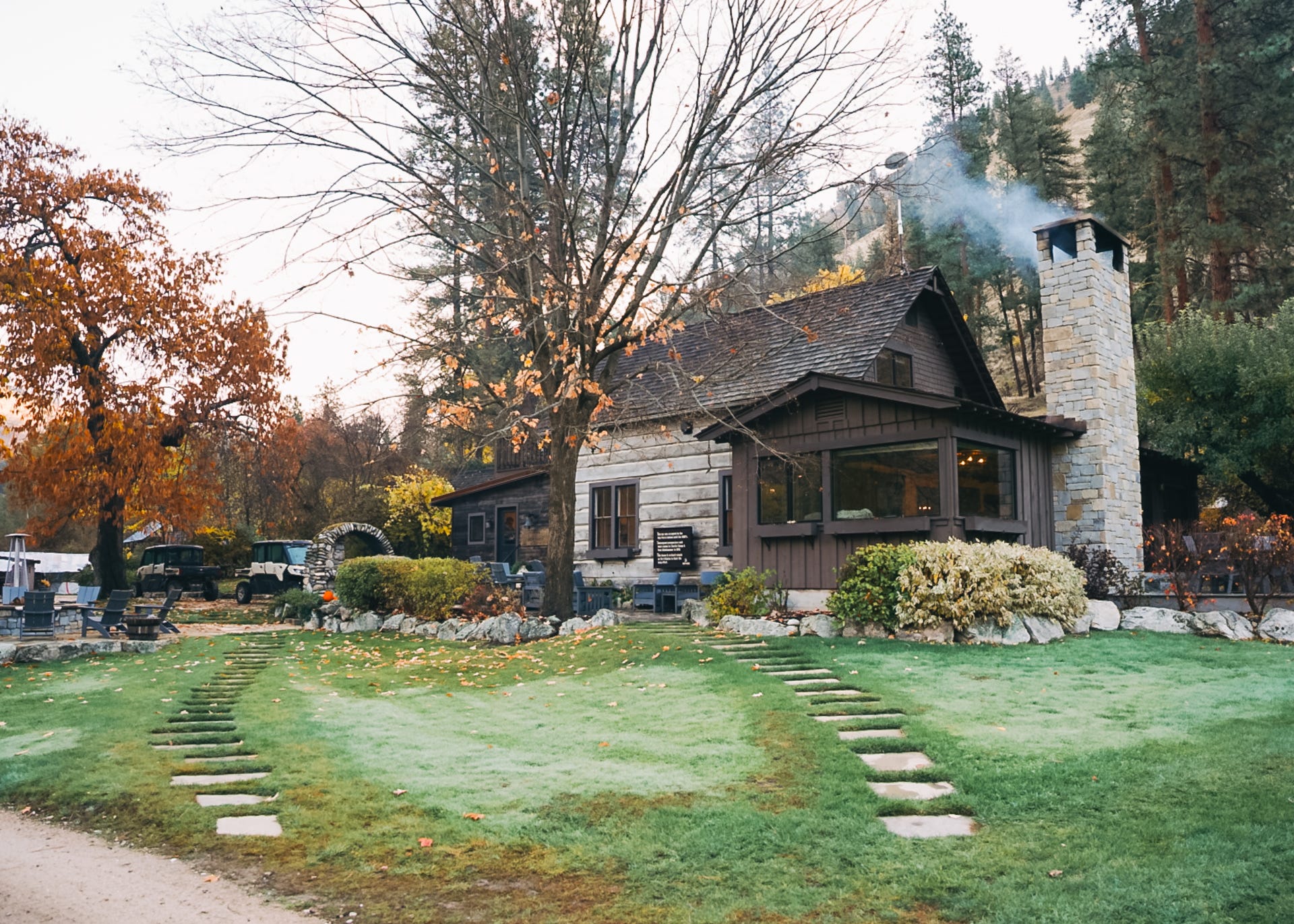
Amazing doesn’t do Shepp Ranch justice. And despite being deep in the Idaho wilderness, this was far from roughing it. Private cabins are scattered throughout the property overlooking the Salmon River. I stayed in the Malone Cabin, tucked just above the river with panoramic views of pine-covered hillsides, bighorn sheep, and endless canyon country. Just up from my cabin sat a sauna overlooking the river. Not exactly the typical steelhead camp setup.
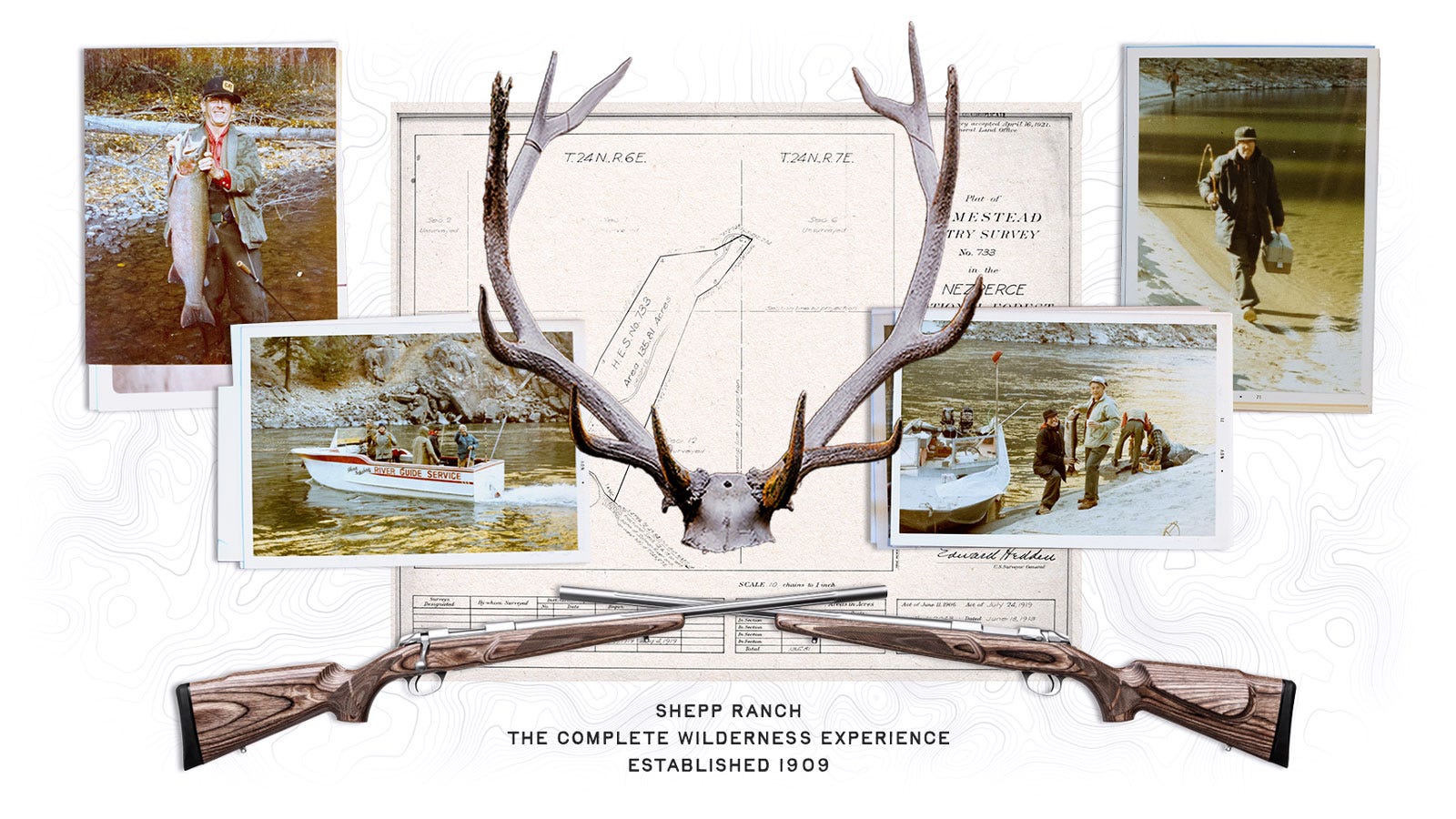
The main lodge somehow managed to feel both historic and luxurious at the same time. The fully renovated house featured an incredible kitchen, a private bar, upstairs rooms, and a massive living room centered around a huge hearth, which was surrounded by old ranch photos, artifacts and decades of history. Everywhere you looked, a story was told.
And the food? Unreal.
The first night featured sushi-grade fish flown in from Florida. This fish was expertly prepared by a Floridian named Teveta. Not exactly what you expect miles into the Idaho backcountry. Safe to say nobody went to bed hungry.
The next morning started early. Black coffee, quick breakfast, waders on, rods rigged.
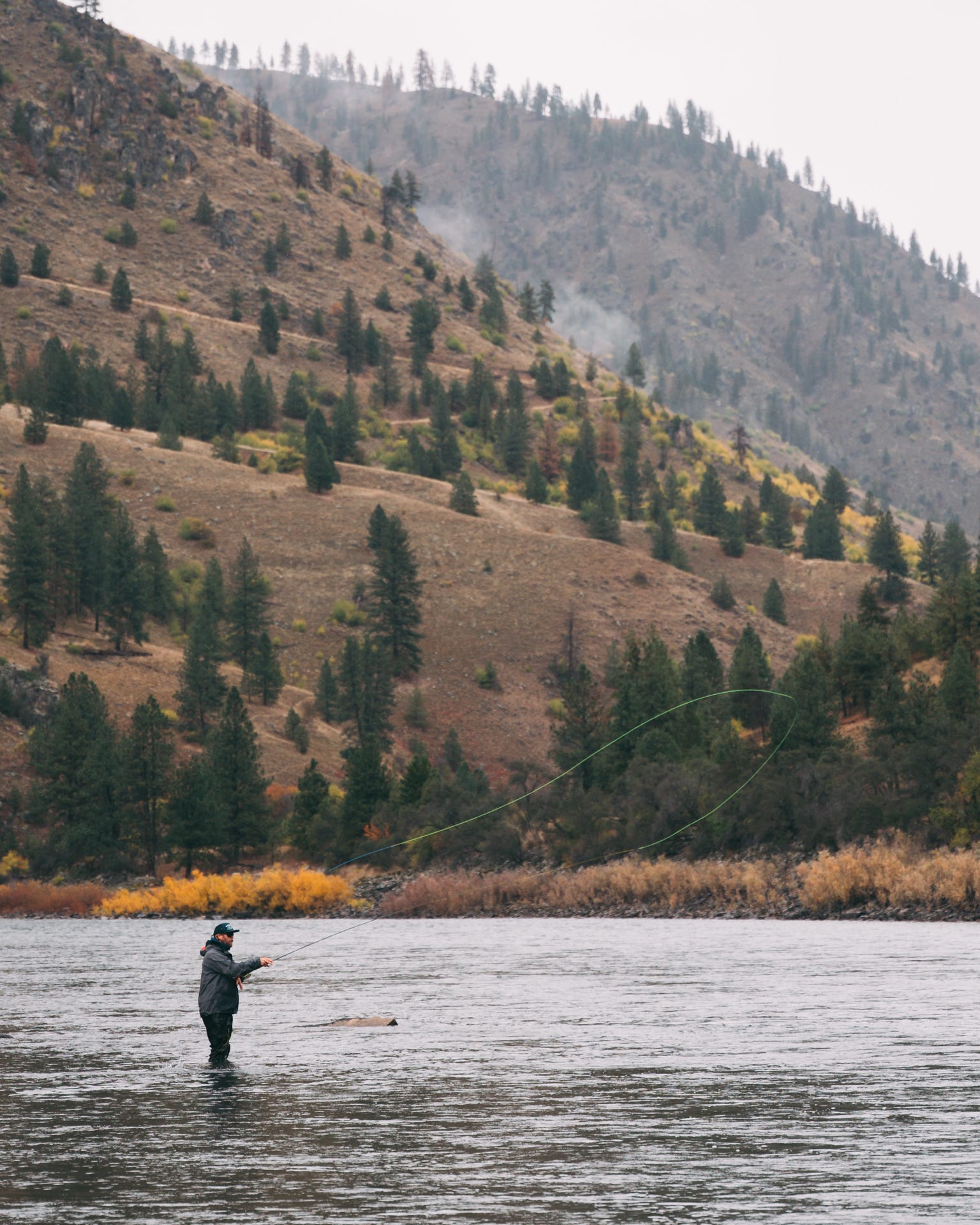
The water felt like a perfect blend between the Clearwater and Snake rivers. Broad, sweeping runs loaded with structure, perfect walking-speed current, classic bucket water, and ideal depth and speed for swinging flies to Idaho’s B-run fish, which are bigger than the earlier A-runs, and sometimes stretch past that 40-inch mark. The biggest difference between fishing the Clearwater or Snake and fishing this remote stretch on the Salmon? We were the only ones swinging a fly for miles.
This wasn’t dry-line fishing.
Back home on the Clearwater, I’ve always leaned heavily toward a “dry or die” mentality. Floating lines and traditional patterns, like Skating Muddlers, Green Butt Skunks, Lady Carolines. That style of fishing owns the Clearwater’s swing culture.
The Salmon played a different game. Here it was Skagit heads, T-11 tips, short leaders, heavy flies, and a dredging approach heavily influenced by guys like Jerry French, Ed Ward and Dec Hogan. Instead of quartering casts downstream and letting the fly swing broadside, we were casting nearly perpendicular to the current, feeding mends, stepping down after the cast, and keeping flies deep and hunting near the bottom.
Honestly, it immediately made sense to me. Growing up backtrolling plugs and fishing jigs under floats, the concept clicked. Put the fly where the fish live and let it work.
Day one ended fishless, but nobody complained.
The next morning started like the previous: black coffee and bacon at first light.
By midday we were spread out on a long, sandy beach, fishing a beautiful run. Travis, head guide at Shepp Ranch, was walking me through some finer details of the setup and presentation when we suddenly heard yelling from upriver near the boat.
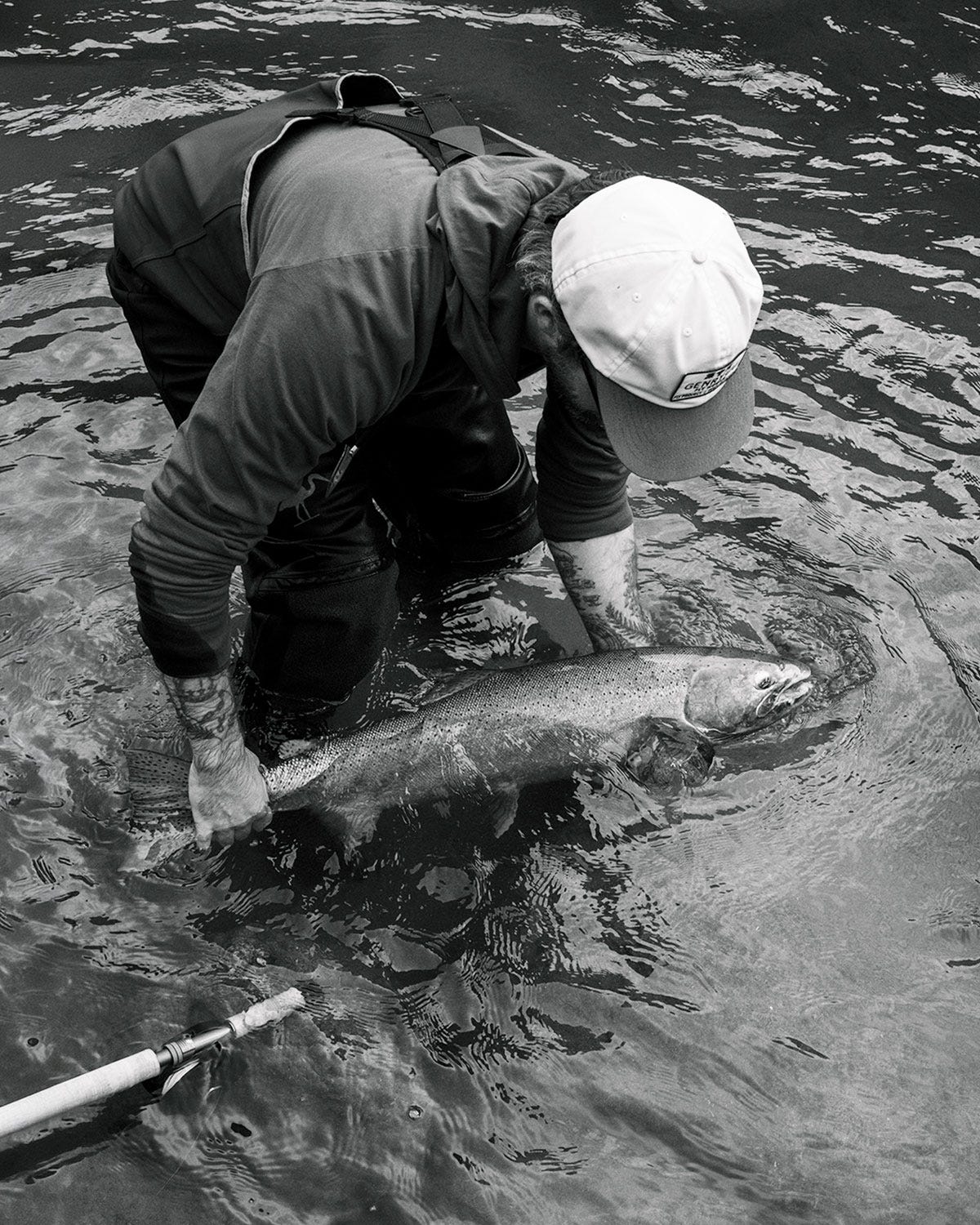
At first we thought someone slipped. Then we saw Darren’s rod buried. He was hooked into a giant.
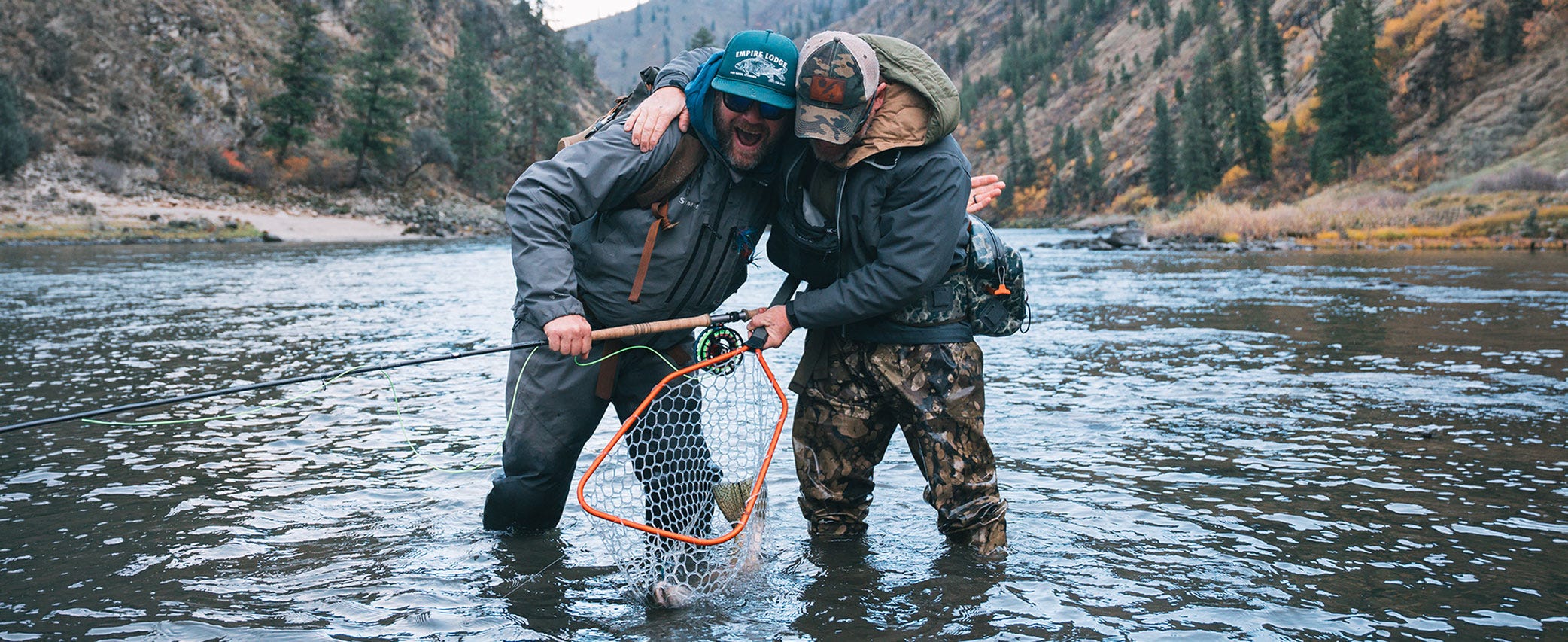
A few moments later he tailed a beautiful 36-inch long B-run buck. After the release a celebration ensued. Shouting, laughing, high fives. It was the kind of moment that keeps steelheaders coming back no matter how many blank days they suffer through. One man’s victory fueling another man’s dream.
The final day arrived with unfinished business. Dan and I still needed a fish.
We spent the morning working through more incredible water. Some of the runs, honestly, looked too perfect not to hold steelhead. We covered water for hours and found mostly bull trout and westslope cutthroat willing to grab on the swing. Fun, but not the target.
Then, suddenly, late in the day, near the bottom of a long run, a fish hammered my black and orange Hoh Bo Spey, then tore upriver. Heavy head shakes. Power. Exactly what I’d waited for.
Then heartbreak.
The fish found a submerged branch along the soft edge of the run.
Pop. Gone.
Just like that.
We scarfed down a quick lunch knowing daylight was running short and shadows were already beginning to swallow the canyon. One last push.
We circled back to a run we loved and had fished on day, and started covering it carefully. Swing after swing. Step after step. Nothing.
Then, right at the end, Dan came tight.
Darren and Travis sprinted downstream with the net while I stayed in the run, convinced another fish was nearby. I could sense it, or so I thought . . . I kept firing casts while the chaos unfolded below me. Nothing.
Eventually I worked my way down to the group. Dan was grinning ear-to-ear, holding another incredible B-run buck, every bit as beautiful as Darren’s fish from the day before.
The stoke level instantly reset to maximum.
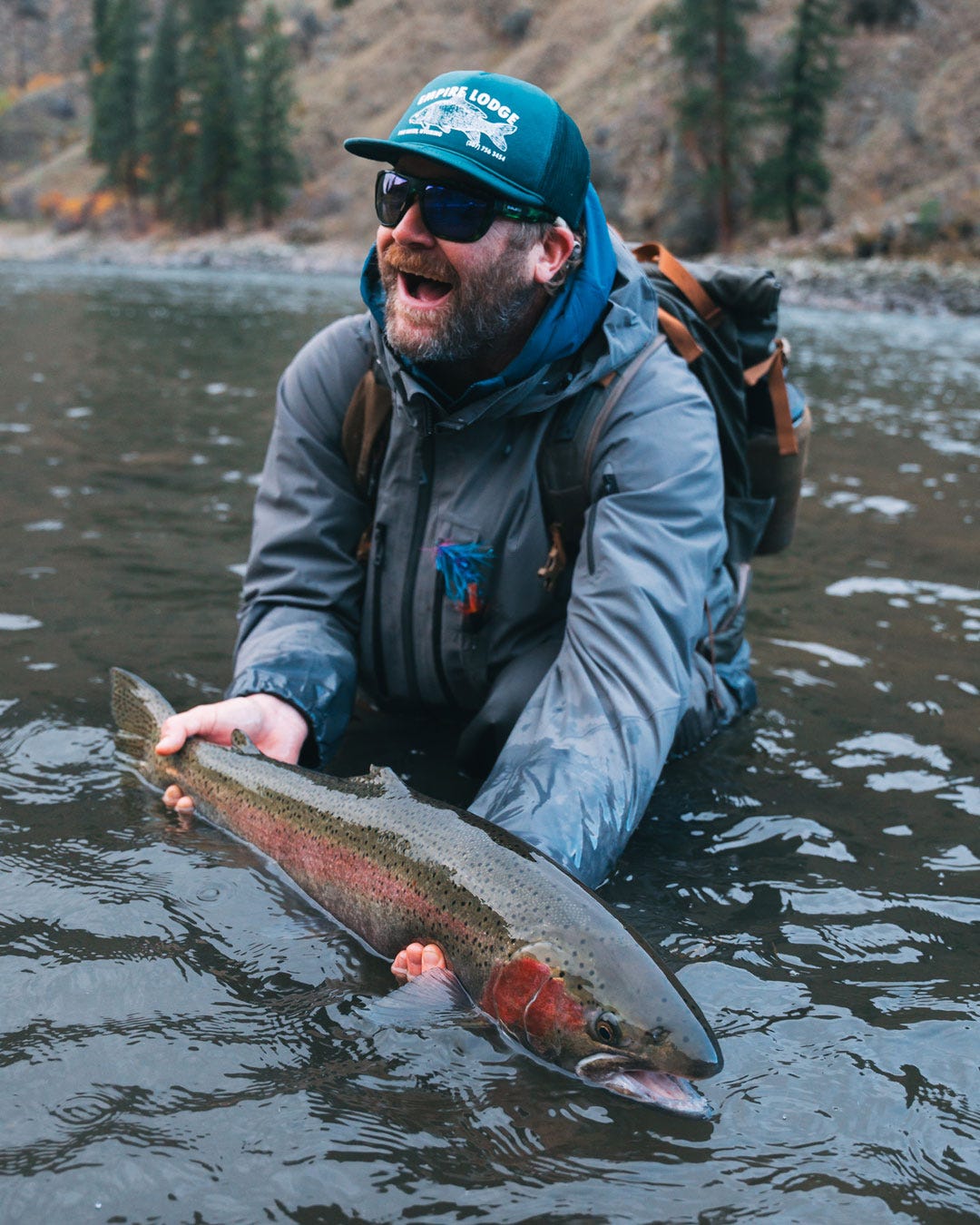
A few hugs, handshakes, and high-fives later, we said goodbye to Travis, the Salmon River, and that wild stretch of Idaho steelhead country.
We stopped once more in Riggins for burgers before Dan headed toward Montana. Darren rode with me back to Lewiston then continued to his own home in Great Falls, Montana. During the drive, we kept circling back through the previous few days.
The water. The canyon. The swings. The grabs.
I was heading home without a steelhead, but that only made me more eager to return. Out there, in Salmon River Country, the usual measures of success are different. Success might be one grab, a solid cast, a good swing through promising water, or simply wading in a place that still feels genuinely wild.
By the time we reached Lewiston, I was tired, wanting sleep, but also secretly hoping the phone would ring, with Travis on the other end, maybe inviting me back.
And just like that, fishing was over.
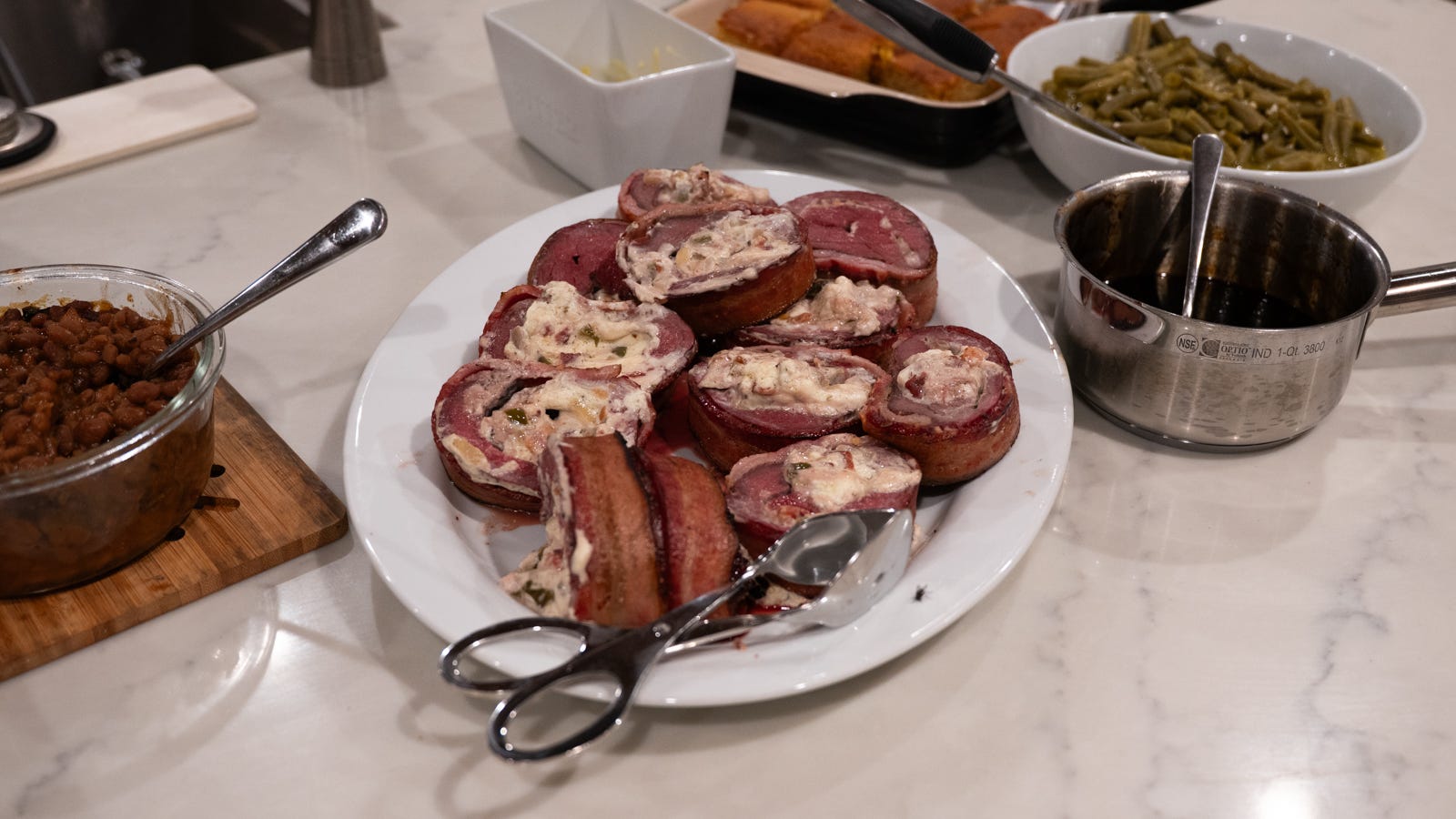
Back at the Ranch we closed out the trip with bacon-wrapped elk backstrap and homemade raspberry pie made from berries picked right there on the property. Whiskey was poured. Stories retold. Nobody really wanted the trip to end.
The next morning, we said our goodbyes to Keith, our gracious host and the owner of Shepp Ranch, and thanked him for sharing a place that felt sacred to a few dedicated steelheaders.
Then came one final surprise.
Before heading back downriver, Travis asked for help loading “a few bales of hay” onto the boat. Sounded simple enough.
A few minutes later he returned driving a front-end loader carrying a thousand-pound bale impaled on the forks. Followed by another. Then another. Then another.
By the end, the boat looked hilariously overloaded and fully committed to “getting western” on the ride back downriver. To outsiders, this was very much a site to behold, but for those who work on the ranch it was just another Tuesday.