
Most Interesting Rods You Probably Haven't Cast

Words by House of Fly
We’re six months into the year already, which has afforded our fly shop managers time to play with a few of the newest rods, along with a couple from past years. With fly shops in Great Falls and Craig, Montana, Sandpoint, Coeur d’Alene and Lewiston, Idaho, plus Spokane and Mead, Washington, they've cast these rods on a variety of waters for a plethora of species, including smallmouth and largemouth bass, trout, steelhead, and redfish. We asked our HOF crew to pick a rod they are most intrigued by this year and here’s the breakdown. Just a few ideas to think about whether you’re heading to the salt, gearing up for summer and fall steelhead, or simply going the route of the single-hander for trout and those warmwater species. When you're in one of our House of Fly shops next time, ask for a test drive and one of the guys will string a rod and let you throw.
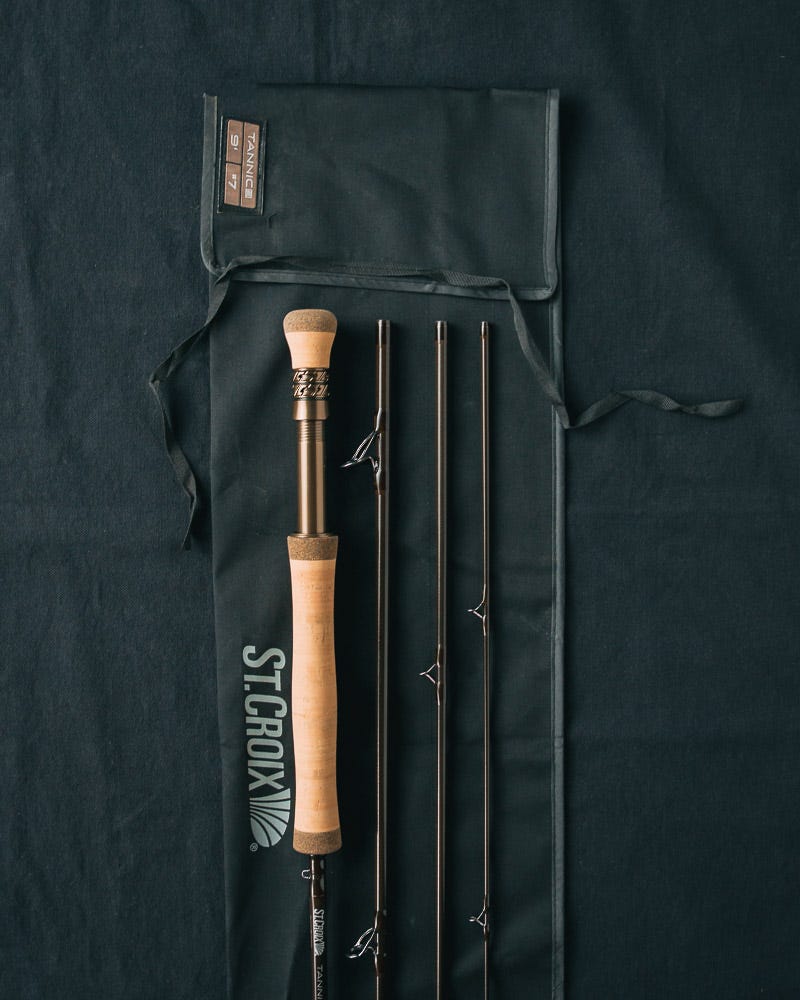
ST. CROIX TANNIC BASS 8’10” 8-WEIGHT - $695
The St. Croix Tannic series flat out scratches the itch of any diehard warmwater angler.
In building the Tannic, St. Croix created a rod that bends deeper in the mid-section than most modern streamer rods and, for me, offers a feeling-controlled cast as a result. The Tannic has a soft tip for laying down big flies with accuracy and a great feel for animating flies on a sink-tip line. It also has plenty of back bone to rope in bronzebacks with ease.
The rod that shines in the lineup is the 8’10” 8-weight. Not only is this a great stick for the aforementioned smallmouth, but it also crushes when chasing redfish and carp. When you need a shorter, stabby rod for quick shots off the bow of a boat, especially when sight-casting to tailing fish, the Tannic in this configuration delivers.
The lines that play best on it, in my experience, are the Four Season Sniper from Airflo in a full intermediate for Swim Flies (Gamechangers, Leggy Bois, Swingin D’s, Tripple Roamer, etc.), Scientific Anglers’ Carp and Bass Bug lines, as well as SA’s Sonar Sink-Tip in Float/Sink3 and Float/Sink6.
I also really dig the modern-classic look and feel of the Tannic with a brown blank and gold lettering over it. There’s a ton of tech in this rod, but rather than bore you with a bunch of egghead I would just encourage you to come in and cast one and see for yourself. I’m alwaysgame for egghead tech talk about rods too, just sayin’.
- Drew Evans, manager, House of Fly Lewiston, Idaho
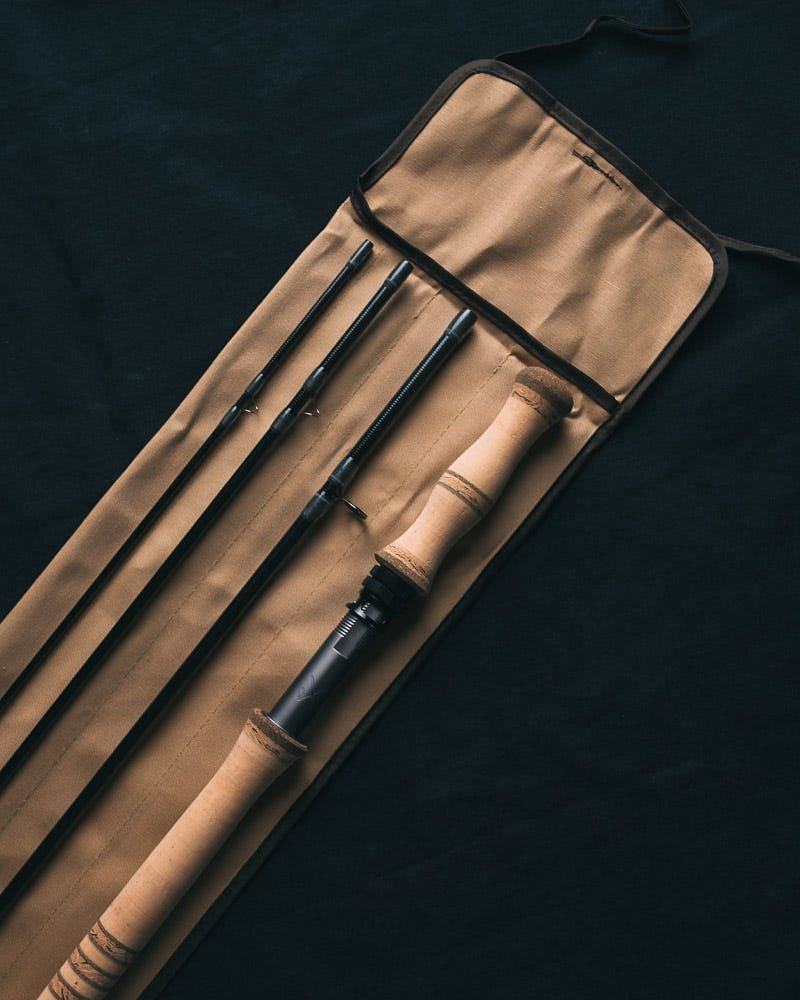
FLY PROJECT SAGA TWO-HAND RODS - $699
A good fly rod should make you smile. I fully admit to spontaneous smiles and giggles while swinging with Saga two-hand rods. The first episode came just after The Fly Project’s Sam Wike handed me a sample of the Saga 4114 trout-spey rod. At the time I was working in the West Great Falls House of Fly fly shop. I took lunch down at Giant Springs, wadered-up and was ready to cast. I flipped the head out into a riffle and before I could continue my casting sequence, a large brown trout destroyed my Flash N’ Grab. Yeah, I giggled a little, and then watched the rod perform with a fish on. After releasing that brown, I settled into casting and soon found that the rod was smooth, light, and perfectly balanced. I hooked a solid rainbow with much more line out, and my appreciation for the Saga grew.
I have since played and fished with the other models. The 6-weight is my go-to for swinging flies for big rainbows, dollies, and silvers on the Kenai. The 8-weight has seen multiple episodes of spontaneous giggles when loaded up with a large steelhead on Idaho’s Clearwater River. The 9-weight got a short workout on a fish I cannot talk about. The 7-weight is our most recent addition and the only model I have not fished, but I enjoyed watching Sam send lasers with it from the Craig, Montana boat landing. I will of course be adding it to my quiver for steelhead this coming fall.
Tech Stuff
The Saga is designed to be fast, responsive and light in the hand and built with cutting-edge construction and the highest end components you can put on a fly rod. It's built on a multi modulus, super-micro, high-density unsanded carbon blank, utilizing graphene resin and a helical core construction. That process reduces the spine effect found on most rods, decreases the twisting phenomenon, increases dampening, and leads to precise casting. On top of all the tech, the Saga is appointed with flexible REC titanium guides, AAAA-grade cork, and satin finished aluminum reel seats. These rods look almost as good as they cast and fish.
Proof Again
I was out on the water with the Saga recently, and I must admit to smiling and giggling multiple times. I was swinging with my now OG 4114 sample rod on the Missouri River below Cascade. I enjoyed encounters with browns and rainbows while swinging a brace of soft hackle flies on my favorite Saga with our Ballistic scandi line. The Saga was the perfect tool for casting and swinging #14 and #16 flies, and cushioning 4X tippet while battling feisty 16-22” trout. What more could I ask for
- Fred Telleen, manager, The Fly Shop, Craig, Montana
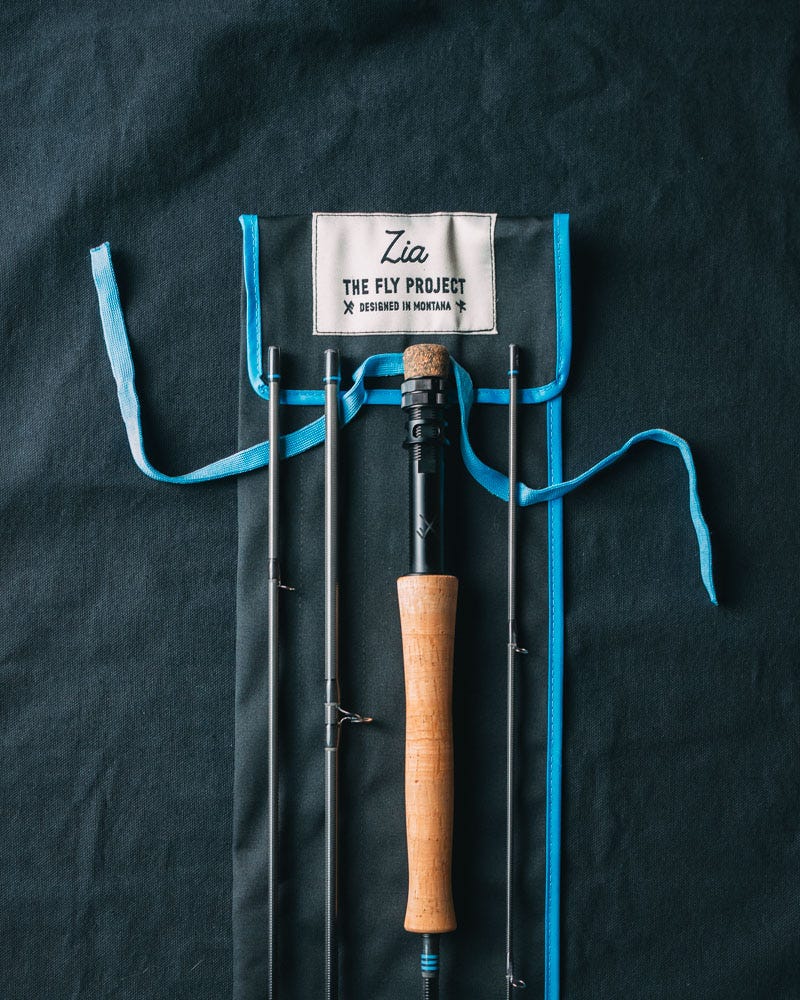
FLY PROJECT ZIA, 7'6" 4-weight - $159
There’s something quietly perfect about buying your kid their first “real” fly rod—and then realizing you may have accidentally bought yourself a new favorite tool. The Fly Project Zia 7'6" 4-weight fly rod is exactly that kind of tool. It’s designed to be approachable and forgiving—lightweight, shorter length, easy to learn on—but still built with enough backbone and feel that it doesn’t end up collecting dust once the novelty wears off. In fact, the Zia was intentionally made to grow with the angler, giving beginners a solid foundation while still performing well enough to stay in the rotation long-term.
Paired with something like the Scientific Anglers Frequency Boost Fly Line (WF-4), it becomes a surprisingly capable little setup. That line loads the rod quickly and turns over a variety of rigs—from small dries to light nymph setups—making it ideal for tight water where you don’t always have room for a full cast. It’s the kind of combo you hand to your daughter for her first casts on a calm pond… and then quietly “borrow” when you sneak off to fish those brushy, high-desert creeks out in Eastern Washington (my backyard) or elsewhere.
And that’s where the rod really shines. Out on those smaller desert streams, where the banks are choked with sage and willows, and every cast is more of a flick than a full stroke. It’s accurate in tight quarters, delicate enough for spooky fish, and honestly just more fun than a longer rod when you’re working pocket water or hopping between little plunge pools. Somewhere along the way, it stops being “her rod” and starts being the one you keep in the truck… just in case you happen to drive past a creek that looks too good not to fish.
- Kris James, manager, House of Fly, Mead, Washington

SAGE PAYLOAD, 8'9" 8-weight - $750
Over the past few years my fishing style has changed quite a bit. From years of focusing on trout and steelhead in my area, I've been doing quite a bit more local bass fishing, Texas redfish, and lots of flats-style carp fishing. Mostly out of skiffs and boats. I really favor Sage’s Payload 8’9” 8-weight and find this shorter, fast-action rod to be perfect for my style of fishing. It’s a great point and shoot sink-tip rod, and very nimble for quick, short redfish or carp shots. The Payload has tons of power to turn a redfish in a coastal Texas creek and not let that fish end up in the salt brush. It’s also a fantastic smallmouth, pike and largemouth bass rod. From bushy pike flies, popping bugs, and big, articulated streamers in the wind, it gets the job done. Fighting fish near the boat is a breeze with this rod because it’s just a touch shorter and easier to manage in the boat. This rod has no shortage of power; it may lack a bit at a long-range delicate shots, but within 50 feet this rod kicks ass. It pairs great with Scientific Anglers’ Sonar Titan sink-tips, and SA’s Bass Bug Taper is great on this rod too. The rod is very stiff so you may want to up-line a bit. I just have the 8-weight now, but will add the 6 and 7-weights to the quiver soon.
- Tyler Balich, manager, House of Fly, Coeur d’Alene, Idaho

SCOTT SESSION, 9' 6-weight - $695
Among the Scott rods I have fished, one stands out to me as a perfect entry-to mid-level rod, the Scott Session, which retails for $695. The first time I got this rod in my hands was on the Kootenai River, which straddles the Montana/Idaho border, when I was fishing the 9’ 6-weight. During summer in north Idaho there are hatches of PMDs and caddis and the fish key in on these, as well as hoppers. We started the day by throwing steamers against the banks and hit the drop-offs, looking for big bull trout and large rainbows. The Session threw mid-size streamers with ease. It had plenty of backbone to handle our weighted bunny leeches, as well as land some medium-size bull trout. Once the PMDs started popping, we quickly switched leaders and threw on some dries. I was amazed at how smooth and accurate the Session was. Not only could it launch streamers, but it still had the feel of a dry-fly rod. Long, smooth casts with soft landings were no problem for the Session. In the afternoon on the Kootenai, the wind usually picks up and starts blowing upstream, and that’s when the hopper fishing gets good. One more tippet swap and we were pounding the banks with size-6 and 8 hoppers. The Session could punch hoppers into the bank on a quartering upstream wind, no problem.
Downfalls? I would say the only downfall is the weight of the Session in-hand. When an angler picks up this rod it feels like a workhorse. And it is. It doesn’t have the super light-in-hand feel like some other rods. I don’t feel like the Session is a specialty rod designed for specific types of fishing, but a rod designed for all types of fishing.
The Scott Session series deserves at least a parking-lot cast, or a day on the water if you are looking for a true made-in-the USA rod for under $1,000.
- Calvin Fuller, buyer, House of Fly

Winston PURE 2, 8'3" 4 and 5-Weights - $995
The R.L. Winston PURE 2 was built with one thing in mind: trout fishing. More specifically, dry-fly fishing. This isn't a rod designed to throw the entire fly line, punch streamers into a headwind, or win a casting competition. It's a rod meant to bend, protect light tippet, make delicate presentations, and bring a little more feel back into fly fishing. It’s meant for the moments when presentation matters more than power (which I could argue is all the time!). When Winston launched the PURE 2 series, I was lucky enough to spend some time around the people who brought these rods to life. Seeing the care that went into these rods made me appreciate them, but fishing the Pure 2 is what made me love them. Of all the models in the lineup, I keep coming back to the 8'3" 4 and 5-weights.
For me, the magic isn't the unmistakable Winston green blank, the hardware, or even the action—it's the 8'3" length. It's just different. The rod feels quick without being fast, precise without being stiff, and delicate without feeling fragile. It throws a tight little loop that seems to know where it's supposed to go before I do. The shorter length gives it a level of accuracy that I don't find in many modern trout rods. Most days, you'll find me reaching for the 5-weight. It's the rod I grab when I'm headed to the river and don't know exactly what the day is going to bring. It excels at everything I want a dry-fly rod to do—accurate casts, delicate presentations, easy mends, and enough backbone when I need to reach a little farther or throw a bigger reach. It's not a distance rod, nor was it designed to be, but it carries line surprisingly well when the situation calls for it. The 4-weight comes with me when I'm fishing smaller water, throwing smaller bugs, or when I want an even lighter touch. Both rods share the same DNA, and both are simply a joy to cast.
In a world full of fly rods built to cast farther, recover faster, and do everything a little more aggressively, the PURE 2 feels content doing something else. It makes casting enjoyable. It makes me pay attention to the little things. If you've never cast a Winston Pure 2, find one and spend a few minutes with it. Not because it's going to magically make you a better angler, but because some rods have a way of making you enjoy fly fishing a little more. For me, the PURE 2 8'3" 4 and 5 weights do exactly that. They're the rods I reach for when I want to fish dry flies, slow down, and enjoy being exactly where I am.
- Karlie Loftice, Sales & Marketing HOF